Institutional accounts only · Pricing and quotes released after verified laboratory registration
Institutional accounts only · Pricing and quotes released after verified laboratory registration
Reference data, Safety Data Sheets, and Certificates of Analysis for every catalog compound. Pricing and quotations are released to verified institutions only. For laboratory research use only.
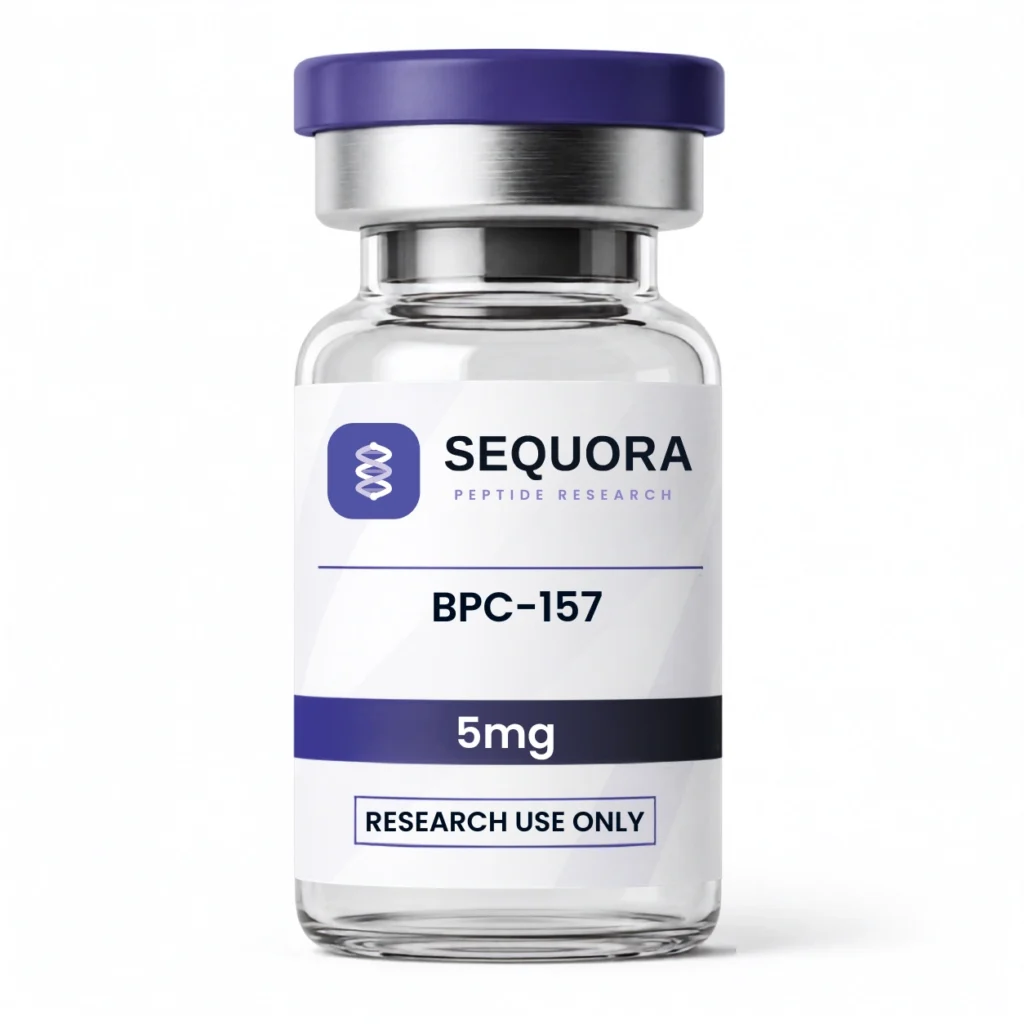
Gastric pentadecapeptides are 15-amino-acid peptides named for their origin in gastric juice research. The class has one well-characterized member: BPC-157, the sequence Gly-Glu-Pro-Pro-Pro-Gly-Lys-Pro-Ala-Asp-Asp-Ala-Gly-Leu-Val [R1]. Its developers describe it as a partial sequence of a human gastric juice protein they called BPC [R2], usually expanded as "body protection compound" [R13]. Research on it is almost entirely in rodent and cell models, and most of it comes from one research center [R3]. Each vial ships with a batch Certificate of Analysis. For background, read our guide: What is BPC-157? A research guide.
COA ✓

COA ✓
COA ✓
A gastric pentadecapeptide is defined by length and origin, not by a receptor. "Pentadeca" means fifteen, and "gastric" points to the stomach-juice research that produced it. The founding paper, published in 1993 by a group at the University of Zagreb, described "a new gastric juice peptide, BPC" [R4]. BPC-157 is the synthetic 15-residue peptide taken from that work. It is also listed under the names bepecin, PL-14736, PL-10 and PLD-116 [R1].
No single receptor has been identified for BPC-157. Studies have looked at nitric oxide signaling, VEGF-related pathways, and focal adhesion kinase (FAK)–paxillin signaling in cell and rodent models [R5][R6]. The developers report that the peptide is stable in human gastric juice, which is unusual for a short peptide [R7].
| Compound | Sequence | Length | Pathways studied | CAS | Formula / MW (g/mol) |
|---|---|---|---|---|---|
| BPC-157 (5 mg, 10 mg) | GEPPPGKPADDAGLV | 15 aa | No identified receptor; NO system, VEGFR2–Akt–eNOS, FAK–paxillin in models [R6] | 137525-51-0 | C62H98N16O22 / 1419.5 |
Identity data: FDA GSRS/UNII 8ED8NXK95P [R1] and PubChem CID 9941957 [R8]. MW is the average molecular weight of the free peptide; acetate salts weigh more.
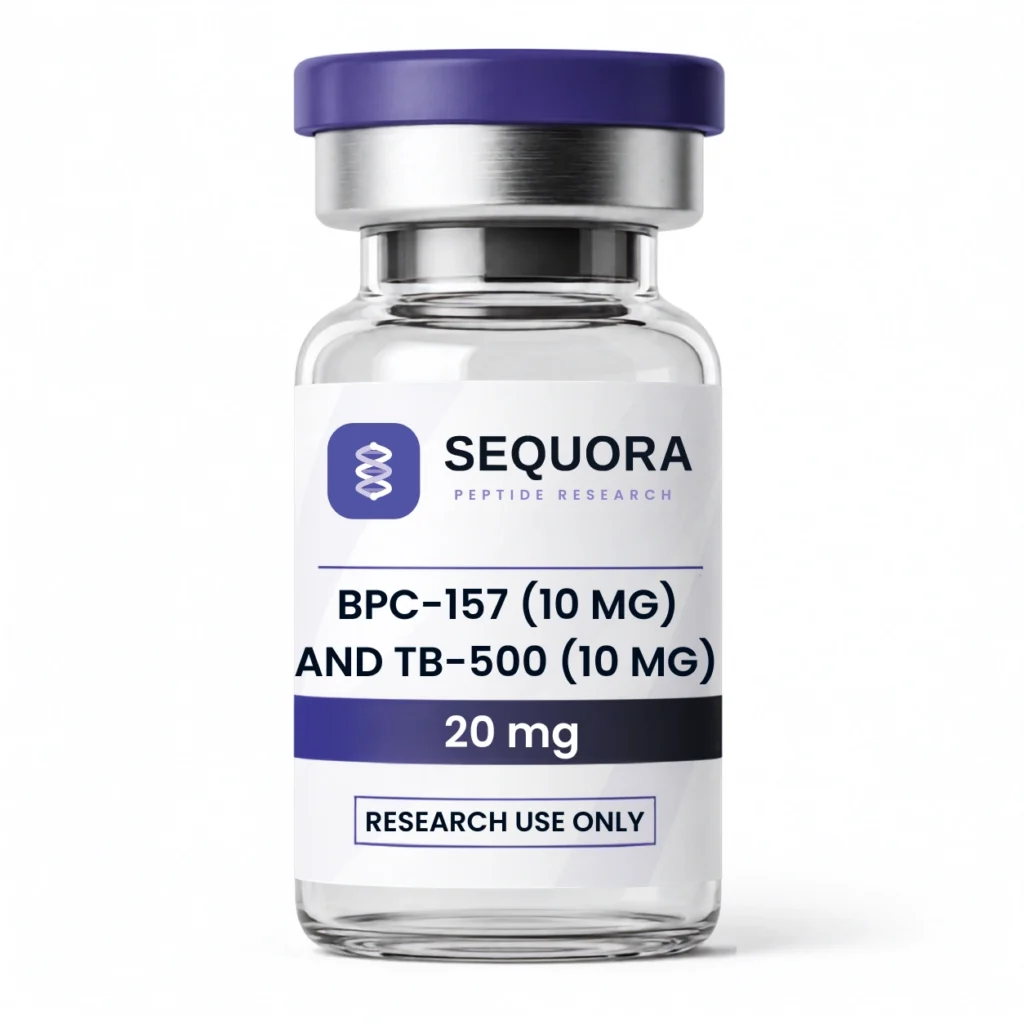
BPC-157 is also sold here as a premixed vial with TB-500 (Ac-LKKTETQ, an acetylated seven-residue fragment of thymosin β4, not the full protein): BPC-157 (10 mg) and TB-500 (10 mg) Blend. TB-500 itself is at TB-500 in Thymosin Peptides. For how the two molecules differ, see BPC-157 vs TB-500.
A 2025 critical commentary noted that most BPC-157 studies "originate from a single research center," and that independent laboratories have added only a handful of short studies [R3]. A 2026 systematic review found three human studies with 30 participants in total, all of poor quality, and rated the certainty of evidence very low [R9].
BPC-157 is not approved by the FDA for any use. In April 2026, FDA said it would remove BPC-157 from "Category 2" of its 503A compounding list, which flags substances with significant safety risks. That removal did not make it eligible for compounding [R10]. On July 23, 2026, FDA's Pharmacy Compounding Advisory Committee voted 8–6, with 1 abstention, to recommend BPC-157 for the 503A bulks list. The vote is advisory; FDA still has to complete rulemaking [R11]. BPC-157 is also named on the 2026 World Anti-Doping Agency Prohibited List [R12].
It is a 15-amino-acid peptide from gastric juice research. BPC-157 is the main example and the only one sold here [R2].
BPC stands for "body protection compound" [R13]. BPC is the name its developers gave to the gastric juice protein the sequence is taken from [R2].
CAS 137525-51-0. The FDA substance identifier (UNII) is 8ED8NXK95P [R1].
No. A July 2026 advisory vote on compounding was non-binding and did not approve it as a drug [R11].
Compare the COA's mass-spectrometry result with the theoretical mass, and check HPLC purity. Our guide explains each line: How to read a peptide COA. See also RUO peptides explained.
For laboratory research use only. Not for human or veterinary use.
Our technical team can help with selection, reconstitution, and storage.
This site supplies chemicals strictly for laboratory research. You must confirm both statements below to enter.
Products are supplied for laboratory research use only and are not for human or veterinary use.