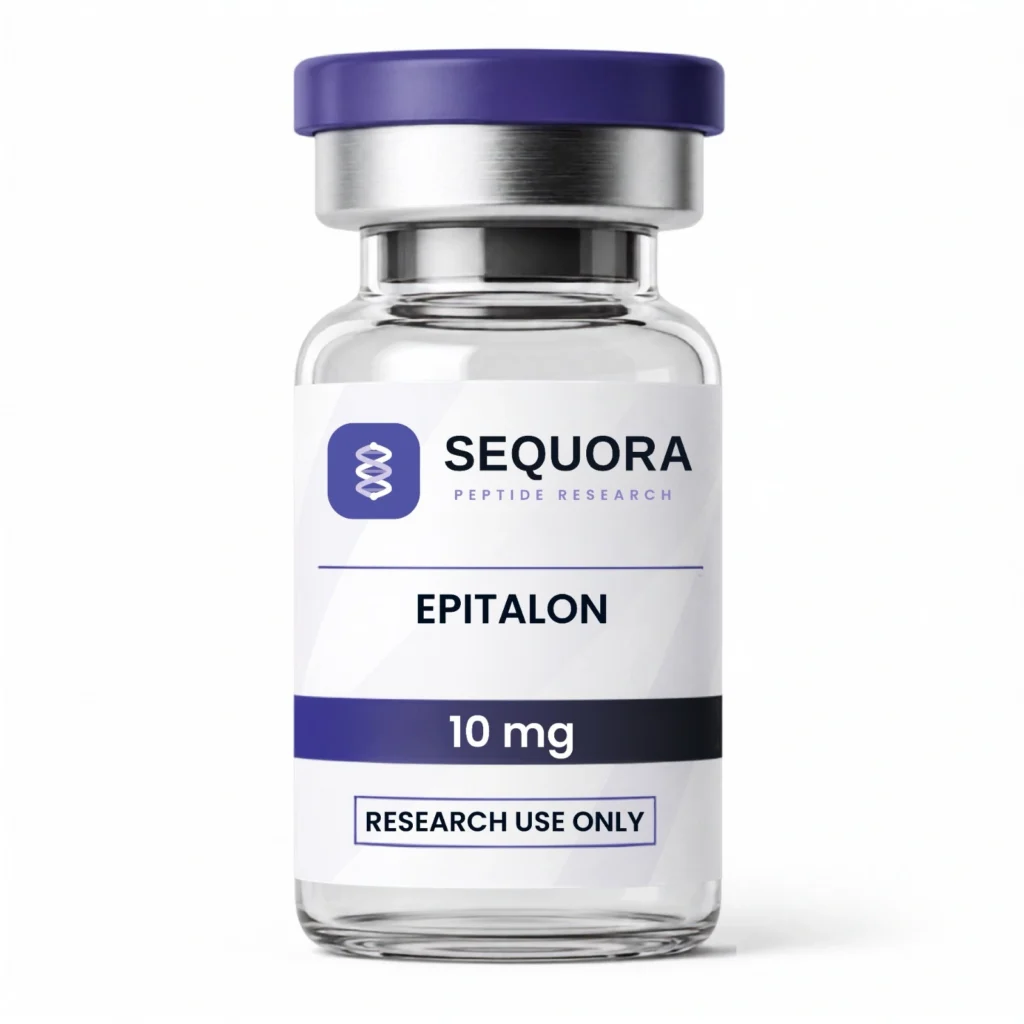
What Defines a Peptide Bioregulator?
A peptide bioregulator is a very short peptide that is proposed to act on gene expression in a specific tissue. The idea is functional, not structural. Most compounds in the group are dipeptides or tetrapeptides. The term is linked to Vladimir Khavinson and the St. Petersburg Institute of Bioregulation and Gerontology in Russia [R3].
The work began with peptide extracts from animal tissues. One of these was epithalamin, a polypeptide preparation from the pineal gland. The group then made short synthetic peptides based on the amino acid makeup of these extracts. Epitalon (Ala-Glu-Asp-Gly) was made this way from epithalamin [R4]. It was described as reproducing some of the extract's effects in animal studies [R3]. For more on the names, see Epitalon vs Epithalon vs Epithalamin.
The proposed mechanism is that these short peptides reach the cell nucleus and interact with DNA or histone proteins. That contact is said to change which genes are read. In one study, gingival mesenchymal stem cells exposed to AEDG showed higher levels of neuronal differentiation markers. Molecular modelling in the same paper suggested the peptide binds histone H1 sites that interact with DNA. The authors called this a possible epigenetic mechanism [R6]. Other work reported telomerase activity and telomere elongation in human somatic cell cultures [R5]. A rodent study looked at aging biomarkers, life span and spontaneous tumor incidence in female SHR mice [R7].
Limits of the evidence. Most published work on bioregulators comes from one research group and its close collaborators. Many studies first appeared in Russian-language journals or their English translations, which makes them harder to check. Independent replication is still limited. One independent cell study, from a UK group, reported telomere lengthening in breast cancer cell lines, with only a minor increase in normal cells [R8]. A 2026 narrative review found that human data on Epitalon are limited to small physiological or biomarker studies. It found no adequately powered randomized trial establishing efficacy, and it described pharmacokinetic and long-term safety data as inadequate [R9]. A 2025 review also noted that physico-chemical and structural studies of Epitalon remain limited [R4].
Bioregulator Compounds Compared
| Compound | Sequence | Length | Pathways studied | CAS | Formula / MW |
|---|
| Epitalon | Ala-Glu-Asp-Gly (AEDG) | 4 amino acids | Telomerase and telomere length (cell); gene expression and histone binding (cell, in silico); aging biomarkers and life span (rodent) | 307297-39-8 | C14H22N4O9 / 390.35 g/mol |
|---|
Identifiers are from the FDA Global Substance Registration System (UNII O65P17785G) and PubChem (CID 219042) [R1][R2]. Pathway entries reflect studies cited on this page [R5][R6][R7].
Regulatory Status
Epitalon is not an FDA-approved drug. In 2026, FDA reviewed nominations to add Epitalon (free base) and Epitalon acetate to the 503A bulk drug substances list. FDA's briefing document for the July 23–24, 2026 Pharmacy Compounding Advisory Committee (PCAC) meeting proposed that neither form be included [R10]. On July 24, 2026, the committee voted 7 to 4, with one abstention, to recommend inclusion. The vote is advisory. A listing would still need FDA notice-and-comment rulemaking [R11]. None of this changes the status of research-grade material sold for laboratory use.
Epitalon is not named on the WADA 2026 Prohibited List. The list's S0 class covers pharmacological substances not addressed elsewhere on the list that have no current approval by any governmental health authority for human therapeutic use [R12].
Frequently Asked Questions
Is Epitalon the same as epithalamin?
No. Epithalamin is a polypeptide extract from bovine pineal glands. Epitalon is a single synthetic tetrapeptide, Ala-Glu-Asp-Gly, designed from the extract's amino acid makeup [R4]. "Epithalon" is an alternate spelling of Epitalon [R1].
Has anyone outside the original group studied Epitalon?
Yes, but not much. A 2025 study from a UK university tested Epitalon in human breast cancer cell lines and normal cells. It reported telomerase upregulation and telomere lengthening in the cancer cell lines [R8]. Most other published work involves the St. Petersburg group.
Are there controlled human trials?
Not of adequate size. A 2026 review found human data limited to small physiological or biomarker studies, with no adequately powered randomized trial [R9].
How can I check a batch of Epitalon?
Compare the certificate of analysis with the reference identifiers. The calculated molecular weight is 390.35 g/mol and the formula is C14H22N4O9 [R2]. See how to read a peptide COA for what HPLC and mass spectrometry results should show.
What does research use only mean for these compounds?
It means the material is sold for laboratory study, not for use in people or animals. Read RUO peptides explained for the details.
References
- U.S. Food and Drug Administration, Global Substance Registration System. Epitalon (L-alanyl-L-α-glutamyl-L-α-aspartyl-glycine), UNII O65P17785G. precision.fda.gov
- PubChem. Epitalon, CID 219042. pubchem.ncbi.nlm.nih.gov/compound/219042
- Khavinson VKh. Peptides and ageing. Neuro Endocrinol Lett. 2002;23 Suppl 3:11-144. PMID 12374906.
- Araj SK, Brzezik J, Mądra-Gackowska K, Szeleszczuk Ł. Overview of Epitalon—highly bioactive pineal tetrapeptide with promising properties. Int J Mol Sci. 2025;26(6):2691. doi:10.3390/ijms26062691. PMID 40141333.
- Khavinson VKh, Bondarev IE, Butyugov AA. Epithalon peptide induces telomerase activity and telomere elongation in human somatic cells. Bull Exp Biol Med. 2003;135(6):590-592. doi:10.1023/a:1025493705728. PMID 12937682.
- Khavinson VKh, Diomede F, Mironova ES, et al. AEDG peptide (Epitalon) stimulates gene expression and protein synthesis during neurogenesis: possible epigenetic mechanism. Molecules. 2020;25(3):609. doi:10.3390/molecules25030609. PMID 32019204.
- Anisimov VN, Khavinson VKh, Popovich IG, et al. Effect of Epitalon on biomarkers of aging, life span and spontaneous tumor incidence in female Swiss-derived SHR mice. Biogerontology. 2003;4(4):193-202. doi:10.1023/a:1025114230714. PMID 14501183.
- Al-Dulaimi S, Thomas RS, Matta S, Roberts T. Epitalon increases telomere length in human cell lines through telomerase upregulation or ALT activity. Biogerontology. 2025;26(5):178. doi:10.1007/s10522-025-10315-x. PMID 40908429.
- Jain A, Gallacher DM, Issa MA, et al. Epitalon and epithalamin: a narrative review of mechanistic, preclinical, and clinical evidence. Int J Mol Sci. 2026;27(19):8922. doi:10.3390/ijms27198922. PMID 42884164.
- U.S. Food and Drug Administration. FDA briefing document, Pharmacy Compounding Advisory Committee meeting, July 23–24, 2026. fda.gov
- McDermott Will & Schulte. Bulk list bound? PCAC backs majority of peptides in two-day public meeting. July 27, 2026. mcdermottlaw.com
- World Anti-Doping Agency. 2026 Prohibited List, in effect January 1, 2026. wada-ama.org
For laboratory research use only. Not for human or veterinary use.