
Institutional accounts only · Pricing and quotes released after verified laboratory registration
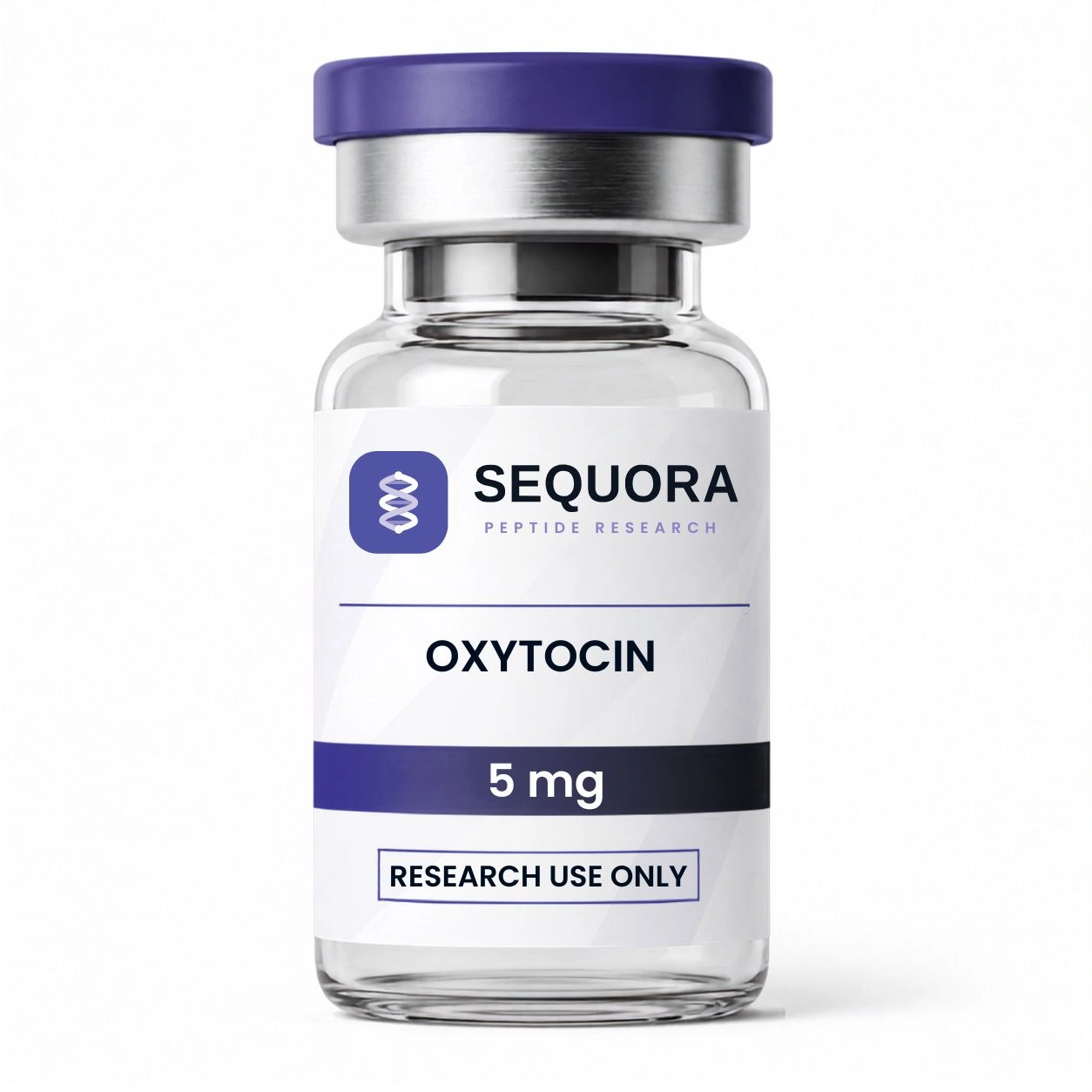
Oxytocin 5mg is a synthetic peptide studied in neuroendocrine signaling, receptor activity, and behavioral research. Supplied by Sequora Peptides strictly for laboratory research use only.
| Molecular Formula | C43H66N12O12S2 |
|---|---|
| Molecular Mass | 1007.2 g/mol |
| Monoisotopic Mass | 1006.436785 g/mol |
| Polar Area | 396 Ų |
| Complexity | 1870 |
| XLogP | -2.6 |
| Heavy Atom Count | 69 |
| Hydrogen Bond Donor Count | 12 |
| Hydrogen Bond Acceptor Count | 14 |
| Rotatable Bond Count | 17 |
Every batch is verified for identity and purity by an independent lab before release.
Scan your batch code to pull the full certificate — chromatogram included.
Material compromised in transit is replaced against the original procurement record.
Oxytocin, first isolated and synthesized in the early 1950s by Dr. Vincent du Vigneaud, is a naturally occurring nonapeptide hormone, which is made largely in the hypothalamus and stored and released by the posterior pituitary gland.
While it is well known for its physiological functions in labour, birth and lactation, scientists have been studying oxytocin for decades, with a focus on its effect on social behaviour, stress regulation, emotional processing, neuroendocrine signalling and metabolic function. The wide variety of biological functions has led oxytocin to be one of the most studied peptide hormones in neuroscience and behavioral research.
Scientists have studied oxytocin for decades, with major expansion in behavioral neuroscience over the past two decades, and now have begun studying it beyond its physiological roles. According to the research paper Intranasal Administration of Oxytocin: Behavioral and Clinical Effects, a Review, published in Neuroscience & Biobehavioral Reviews, has examined oxytocin in a wide variety of laboratory and clinical contexts, ranging from social cognition, anxiety-related behavior, autism spectrum disorder and schizophrenia to eating behavior and stress physiology.
The review highlights that, although many outcomes are encouraging, there are mixed current clinical data and a need for additional well-designed trials to reveal the therapeutic potential of oxytocin.
Today, researchers continue to study oxytocin to better understand its mechanisms of action within the central nervous system, its interactions with oxytocin receptors throughout the body, and its potential role in regulating complex behavioral and physiological processes.
Oxytocin is FDA-approved for some obstetric indications, but many of its neurological and behavioral applications are active areas of scientific investigation.
If you are looking for Oxytocin 5mg or a reliable source of research-grade oxytocin, Sequora Peptide has high-purity, third-party-tested oxytocin that is manufactured for Research Use Only (RUO).
| Characteristic | Specification |
| Product Name | Oxytocin 5mg |
| Sequence of Peptide | Cys–Tyr–Ile–Gln–Asn–Cys–Pro–Leu–Gly-NH₂ |
| Peptide Type | Synthetic nonapeptide hormone |
| Synonyms | Oxytocin, Pitocin (pharmaceutical formulation) |
| Molecular Formula | C₄₃H₆₆N₁₂O₁₂S₂ |
| Molecular Weight | 1007.19 g/mol |
| CAS Number | 50-56-6 |
| PubChem CID | 439302 |
| Length of Peptide | 9 amino acids (Nonapeptide) |
| Purity | (HPLC Tested) |
| Appearance | White lyophilized powder |
| Storage | Store at 2–8°C before and after reconstitution |
| Solubility | Sterile water or bacteriostatic water for laboratory research |
| Research Use | Research Use Only (RUO) |
Oxytocin is one of the peptide hormones that have been the focus of considerable research in contemporary biomedicine. Oxytocin is a natural hormone and a nonapeptide synthesized mainly by neurons in the paraventricular and supraoptic nuclei of the hypothalamus and secreted by the posterior pituitary gland. Although oxytocin has well-known physiological functions in terms of uterine contractions during childbirth and lactation, decades of studies have shown that oxytocin acts as an important neuromodulator in the central nervous system.
Oxytocin was discovered and synthesized in the 1950s by Dr. Vincent du Vigneaud, whose work on the chemical structure of peptide hormones resulted in him being awarded the Nobel Prize in Chemistry in 1955. It became the first hormone of this type to be chemically synthesized and set the course for numerous subsequent studies on peptide medications.
Interest in oxytocin in scientific circles has gone far beyond its effects on reproductive physiology. In particular, according to “Intranasal Administration of Oxytocin: Behavioral and Clinical Effects, a Review,” published in Neuroscience & Biobehavioral Reviews, researchers have examined the impact of oxytocin on social cognition, emotional processes, stress, autism spectrum disorder, schizophrenia, eating behaviors, and metabolism. Based on a review of the results of these studies, it can be said that while a lot of positive biological effects were found, there is a lack of evidence of clinical efficacy.
In today’s time, oxytocin is being studied extensively in lab settings as well as in clinical trials to gain more insight into how it interacts with the oxytocin receptor (OXTR) and to understand the influence it may have on various physiologic and neurologic functions. Oxytocin is being researched for use in the following areas:
Although oxytocin is currently used as an FDA-approved drug in specific obstetric uses, many of the neurological and behavioral aspects of oxytocin are still experimental in nature.
Oxytocin interacts with the oxytocin receptor (OXTR) and produces its effects by activating this receptor. The oxytocin receptors are members of the G-protein coupled receptor (GPCR) family that are distributed in the central nervous system, uterus, mammary glands, heart, kidney, and other tissues. The activation of OXTR by oxytocin triggers intracellular signal transduction cascades that result in the regulation of calcium homeostasis or smooth muscle contraction, modulation of neurotransmission, and cell communication.
The first step in the oxytocin mechanism involves the binding of oxytocin to the oxytocin receptor (OXTR). As reported in the article “Crystal Structure of the Human Oxytocin Receptor,” published in Science, “researchers determined the structure of the human oxytocin receptor and identified key interactions that mediate receptor activation and oxytocin binding selectivity”. Moreover, the scientists have found a cholesterol-binding site, contributing to the receptor’s functions and providing new opportunities for developing drugs targeting this receptor.
One of OXTR’s main signaling cascades, which is initiated by its activation, is coupling with Gq/11 proteins, with subsequent activation of phospholipase C (PLC). The latter catalyzes the formation of inositol 1,4,5-trisphosphate (IP3) and diacylglycerol (DAG). IP3 causes an increase in the concentration of calcium ions inside the cell, whereas DAG, in turn, activates protein kinase C.
The abovementioned mechanisms are described in detail in Oxytocin and Vasopressin: Signalling, Behavioural Modulation and Receptor Crosstalk published in the British Journal of Pharmacology, allowing us to understand the various effects of oxytocin on different tissues at the molecular level and appreciate the intricate interplay between oxytocin and vasopressin receptors.
In addition to peripheral effects, oxytocin is an important neuromodulator in the brain. In the study titled ‘Intranasal Administration of Oxytocin: Behavioral and Clinical Effects, A Review’ published in the ‘Neuroscience & Biobehavioral Reviews,’ researchers have explored oxytocin’s function within various brain circuits, including those involved in social cognition, affiliative behaviors, stress response, reward processing, and social recognition. Despite the volume of studies reporting biological effects, the review concludes that clinical evidence remains inconsistent, necessitating further controlled investigations.
There is ongoing research on oxytocin’s role in social neuroscience, neuroendocrinology, metabolism, cardiovascular physiology, and neurodevelopmental disorders. While the hormone’s role in reproduction and childbirth is well-established, its broader neurobiological implications are still being unraveled. Basic science research and randomized controlled trials will likely contribute to a deeper understanding of oxytocin’s multifaceted roles in physiology and pathology in the future.
Oxytocin has been the subject of extensive preclinical and clinical studies. The hormone’s role in reproduction is well established, but scientists are working to fully understand its role in social cognition, mental health, metabolism, learning, memory, and stress response. The clinical efficacy of oxytocin remains uncertain, despite some promising preliminary results.
As stated in Intranasal Administration of Oxytocin: Behavioral and Clinical Effects, a Review, published in the Neuroscience & Biobehavioral Reviews journal, intranasal oxytocin’s role in social cognition, trust, and recognition, as well as pro-social behaviors, has been subject to multiple experimental investigations. The review highlights the evidence of oxytocin’s ability to demonstrate clinically relevant biological responses, although the effect sizes appear inconsistent and variable between studies.
The hormone’s impact on the social cognition of patients with autism spectrum disorder, schizophrenia, anxiety, and depression has also been studied. According to The Role of Intranasal Oxytocin in Anxiety and Depressive Disorders: A Systematic Review of Randomized Controlled Trials, published in the Clinical Psychopharmacology and Neuroscience journal, the current level of evidence does not provide sufficient support for the use of intranasal oxytocin for treating anxiety and depressive symptoms. The study recommends additional large-scale clinical trials to assess the therapeutic potential of oxytocin better.
Furthermore, the safety of intranasal oxytocin in humans has been studied in clinical trials and research investigations. As noted in A Review of Safety, Side-Effects and Subjective Reactions to Intranasal Oxytocin in Human Research, published in Psychoneuroendocrinology, oxytocin was deemed generally safe and tolerable in most clinical investigations. The review also mentions the absence of significant and long-lasting adverse effects reported by the participants. Nevertheless, the authors of the review stress the importance of additional preclinical and clinical studies to establish the hormone’s safety in humans.
The hormone oxytocin is currently a major focus of research in neuroscience, endocrinology, and related disciplines. Particular emphasis is placed on deciphering its influence on the central nervous system, intermediary metabolism, hemodynamics, and neuroendocrinology, as well as identifying the populations and therapeutic contexts most likely to benefit from its use.
Oxytocin is being investigated in numerous biomedical research areas due to its physiological and neurological impact. Relevant clinical and preclinical studies explore oxytocin’s role in social behaviors and cognition, neuroendocrine function, stress response, emotional behavior, metabolism, cardiovascular system function, and neurodevelopment. The therapeutic potential of oxytocin has been widely studied and reported in scientific literature. However, there are still several areas of investigation that explore oxytocin’s potential impact, and the results of these studies can contribute to a better understanding of the peptide’s mechanism of action.
The preclinical and clinical study of oxytocin is currently conducted in areas such as:
As stated in Intranasal Administration of Oxytocin: Behavioral and Clinical Effects, a Review, published in the journal Neuroscience & Biobehavioral Reviews, most of these areas of research have yielded promising results. However, the article notes that oxytocin’s clinical effectiveness appears to be inconsistent across different studies, and more research is needed for a better understanding of the hormone’s therapeutic capabilities.
Oxytocin is FDA-approved for the treatment of selected indications, including the induction or augmentation of labor contractions and management of postpartum hemorrhage. FDA approval covers only the specific applications stated above. The oxytocin products are manufactured exclusively for therapeutic use by medical professionals.
While researchers are currently studying additional potential indications, they have not yet received regulatory approval.
Oxytocin 5mg for research from Sequora Peptide is manufactured for Research Use Only and should only be handled by authorized personnel in a professional laboratory setting. The peptide should not be used for human consumption, clinical applications, or self-experimentation.
Proper storage is crucial to maintaining the stability, purity, and potency of Oxytocin 5mg throughout laboratory experiments.
To ensure the quality and integrity of the substance during your research:
Oxytocin 5mg is a research-grade form of the endogenous oxytocin hormone peptide. This product is used by researchers to study neuroendocrine signaling, social cognition, stress physiology, metabolism, and oxytocin receptor biology.
Oxytocin functions by binding the oxytocin receptor (OXTR), which is a G-protein coupled receptor (GPCR) found in both the central nervous system and peripheral tissue. The action on this receptor triggers intracellular signaling pathways that are involved in cell signaling, intracellular calcium release, neurotransmission, and smooth muscle contraction.
Oxytocin is commonly studied in the following research areas:
The applications of oxytocin mentioned above are the current area of scientific interest and require further clinical research.
Yes. Oxytocin used in pharmaceutical preparations is FDA approved for use in specific obstetric conditions, which include induction of labor, augmentation of labor, and the management of postpartum hemorrhage. However, Oxytocin 5mg offered by Sequora Peptide is a Research Use Only (RUO) drug and is not approved for human consumption or therapeutic purposes.
The lyophilized peptide should be stored at 2-8°C (36-46°F) in a cool, dry place that is protected from extreme temperatures, light, and moisture. Following reconstitution, the solution should be stored in a refrigerator and should not be subjected to multiple freeze-thaw cycles.
No. Oxytocin 5mg manufactured by Sequora Peptide is for Research Use Only (RUO). It is meant for laboratory use only and is not for human consumption or therapeutic use.
Sequora Peptide Oxytocin 5mg is designed specifically for Research Use Only (RUO) purposes. The substance is produced and distributed strictly for conducting scientific and research activities carried out by qualified researchers. The product is not suitable for consumption, application, diagnostic, pharmaceutical, or any other purpose except for scientific and research use.
Though oxytocin-containing drugs approved by governmental agencies are available and used for certain medical purposes, Sequora Peptide Oxytocin 5mg is neither approved nor designed for any medical or pharmaceutical purposes. Nothing stated on this website can be construed as an assertion about diagnosis, treatment, mitigation, cure, or prevention of any diseases.
It is solely the responsibility of the researcher to make sure that all procedures related to acquisition, transportation, and use of this product meet all appropriate laws and regulations.
This product should be handled only in a qualified lab environment by researchers who have sufficient scientific knowledge and skills.
COA ✓

COA ✓
COA ✓
This site supplies chemicals strictly for laboratory research. You must confirm both statements below to enter.
Products are supplied for laboratory research use only and are not for human or veterinary use.