
Institutional accounts only · Pricing and quotes released after verified laboratory registration
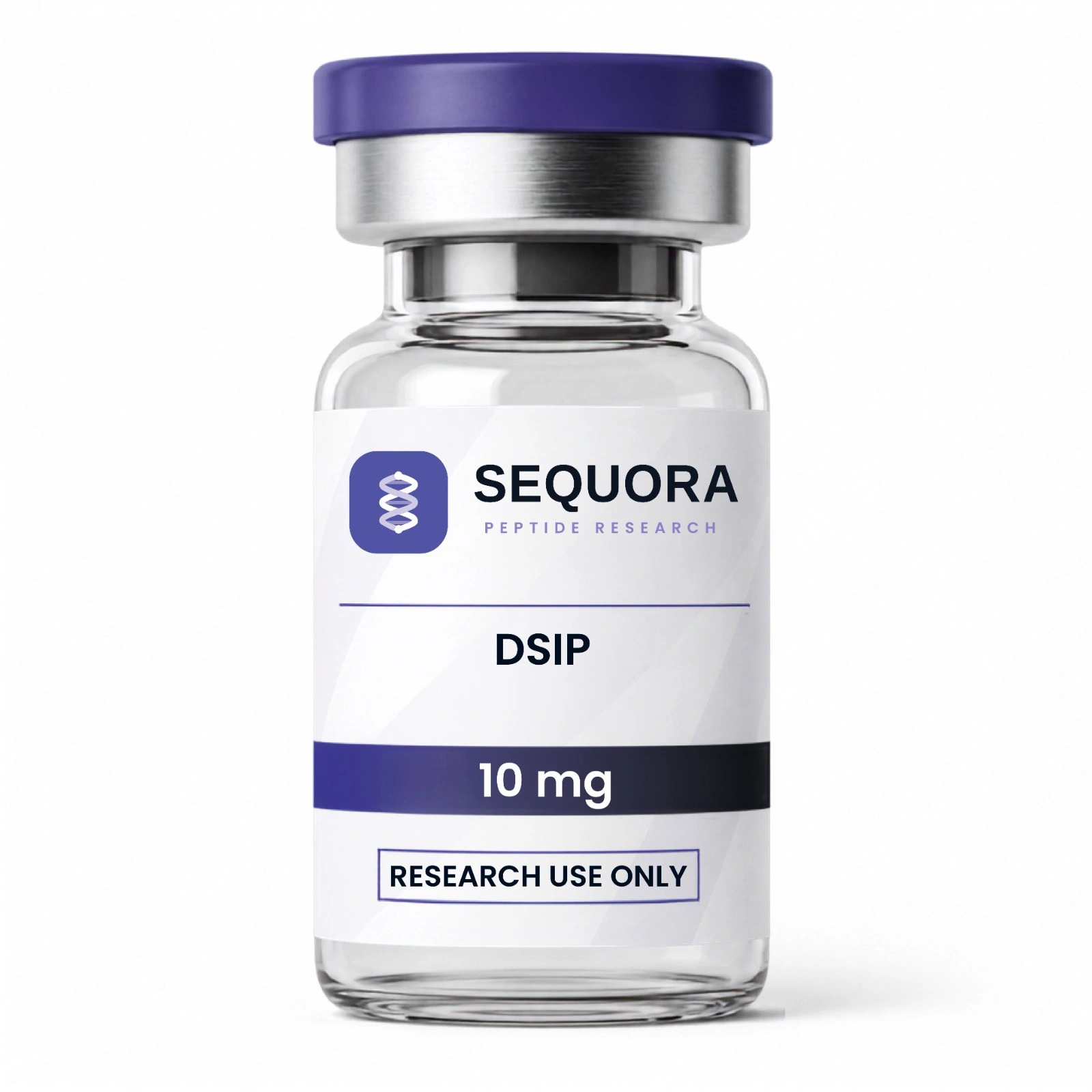
DSIP 10mg is a research peptide that has been studied in connection with sleep, stress, and neurobiological processes. Researchers continue to investigate DSIP and its properties in controlled research settings. Offered by Sequora Peptides for research purposes.
| Molecular Formula | C35H48N10O15 |
|---|---|
| Molecular Mass | 848.8 g/mol |
| Monoisotopic Mass | 848.324961 g/mol |
| Polar Area | 363 Ų |
| Complexity | 1510 |
| XLogP | -3.7 |
| Heavy Atom Count | 60 |
| Hydrogen Bond Donor Count | 13 |
| Hydrogen Bond Acceptor Count | 15 |
| Rotatable Bond Count | 18 |
Every batch is verified for identity and purity by an independent lab before release.
Scan your batch code to pull the full certificate — chromatogram included.
Material compromised in transit is replaced against the original procurement record.
The Delta Sleep-Inducing Peptide (DSIP) is a synthetic nonapeptide first identified in 1977 by Swiss researchers Monnier and Schoenenberger through the study of natural peptides involved in the regulation of sleep. Since its discovery, DSIP has been under scrutiny by scientists due to its possible role in the physiology of sleep, regulation of the neuro-endocrine system, stress reactions, pain modulation, and circadian physiology. The physiological function of DSIP and its mechanisms of action have not been fully comprehended despite years of research, hence its continued investigation in the laboratory.
Based on Delta-Sleep-Inducing Peptide (DSIP): A Review in Neuroscience & Biobehavioral Reviews, experiments have been conducted regarding the possible function of DSIP in animals and even humans through clinical trials. Its possible impacts on sleep, endocrine physiology, stress reaction, pain perception, and brain activity have been studied. However, the review highlights that there has been inconsistency in the results obtained; hence, more controlled investigations are required.
Further studies of DSIP have continued in both preclinical and clinical environments. As per “Delta-Sleep-Inducing Peptide (DSIP): An Update,” which appeared in Peptides, there have been more studies carried out about the effects of DSIP on sleep regulation, hormone secretion, opioid withdrawal, stress physiology, and neuroprotection. While these studies have increased knowledge about the biological functions of DSIP, the authors assert that its function and mechanism continue to be investigated scientifically.
Are you in search of DSIP 10 mg or a reliable supplier of research-quality Delta Sleep-Inducing Peptide?
Sequora Peptide supplies pure DSIP that is made specifically for Research Use Only (RUO).
| Charecteristic | Specification |
| Name of Product | DSIP 10mg |
| Peptide Sequence | Trp–Ala–Gly–Gly–Asp–Ala–Ser–Gly–Glu |
| Type of Peptide | Synthetic nonapeptide |
| Peptide Synonyms | DSIP, Delta Sleep-Inducing Peptide |
| Molecular Formula | C₃₅H₄₈N₁₀O₁₅ |
| Molecular Weight | 848.82 g/mol |
| PubChem CID | 3623358 |
| CAS Number | 62568-57-4 |
| Length of Peptide | 9 amino acids (Nonapeptide) |
| Purity | (HPLC Tested) |
| Appearance | White lyophilized powder |
| Solubility | Sterile water or bacteriostatic water for laboratory research |
| Storage | Store at 2–8°C before and after reconstitution |
| Research Use | Research Use Only (RUO) |
The Delta Sleep-Inducing Peptide (DSIP) was first identified in 1977 when scientists examined endogenous peptides, which may be regulating sleep and circadian rhythms. It was thought at first that DSIP may have an impact on delta-wave sleep, creating great interest among scientists in studying its physiological activity. Over the years, scientists have tested DSIP in many experiments in order to understand possible impacts on sleep regulation, neuroendocrine activity, reactions to stress, pain modulation, and neurological activity.
As can be seen from The Delta EEG (Sleep)-Inducing Peptide (DSIP). XI. Amino-Acid Analysis, Sequence, Synthesis and Activity of the Nonapeptide, the scientists succeeded in establishing the amino acid sequence of the DSIP and synthesizing the peptide for further experimentation.
As scientific studies went on, further testing was carried out in various experimental models for DSIP. As described in the paper “Delta-Sleep-Inducing Peptide (DSIP): A Review“, from the journal “Neuroscience & Biobehavioral Reviews,” research has considered the possible function of DSIP in:
It is mentioned in the review that although there were many interesting findings obtained experimentally, their inconsistency, as well as the physiological role of the peptide, was unclear.
The study published in the Peptides journal, “Delta-sleep-inducing peptide (DSIP): An update,” provides researchers with more information about the biological activity of this compound. Nevertheless, they note that until now there is no certainty about the receptor sites, and its mechanism of action remains unclear. Hence, for now, DSIP is considered an investigational peptide subject to preclinical and clinical trials in pursuit of obtaining greater knowledge about its biological effects.
Presently, scientific studies on DSIP are primarily concerned with elucidating its molecular biology, neuroendocrine mechanisms, and physiological functions through preclinical and clinical experiments.
Unlike many other peptide hormones, Delta Sleep-Inducing Peptide (DSIP) does not have a confidently identified receptor or mechanism of action. There is still an ongoing scientific debate regarding the mode of action of DSIP. Scientists hypothesize that DSIP may operate through multiple systems, as opposed to a singular pathway.
The neuroendocrine regulation hypothesis was among the first proposed modes of action for DSIP, according to Delta-Sleep-Inducing Peptide (DSIP): A Review published in Neuroscience & Biobehavioral Reviews. The hypothesis claims DSIP may regulate the secretion of multiple hormones, including ACTH, LH, GH, and cortisol.
However, subsequent trials have yielded conflicting results, and the mechanisms by which DSIP may be involved in the regulation of these hormones are not fully understood.
DSIP was originally identified because of its apparent association with delta-wave sleep. According to Delta-Sleep-Inducing Peptide (DSIP): An Update, published in Peptides, subsequent studies produced mixed results regarding its influence on sleep architecture. While some animal and early clinical studies reported changes in sleep patterns, others failed to demonstrate consistent effects, leaving DSIP’s exact role in sleep regulation unresolved.
Researchers have also examined the effects of DSIP on isolated cell models and animal models that mimic stress physiology and neurobiology. The results of these studies indicate that DSIP may have an impact on physiological processes associated with stress response and modify some aspects of neuronal function. Nevertheless, more research is needed to understand the mechanisms by which DSIP affects the human body.
The mechanisms of action of DSIP are currently under heavy investigation. Based on the existing scientific evidence, DSIP appears to have multiple modes of action, which may be involved in regulating various aspects of human physiology.
DSIP is thought to interact with various neuroendocrine regulatory systems, neuromodulatory systems, and circadian rhythms. However, as of now, its exact mechanism of action has yet to be identified.
Unlike many peptide hormones that interact with well-characterized receptors, Delta Sleep-Inducing Peptide (DSIP) has no conclusively identified receptor or fully established molecular mechanism of action. Scientists have been studying DSIP for decades, but they’re still trying to understand how it works. Recent evidence suggests that DSIP may act on multiple physiological systems via complex interactions between neuroendocrine and neurotransmitters rather than a single signaling pathway.
One of the early areas of DSIP research was its potential involvement in the regulation of the neuroendocrine system. According to Delta-Sleep-Inducing Peptide (DSIP): A Review, published in Neuroscience & Biobehavioral Reviews, experimental studies reported that DSIP may influence the secretion of several hormones, including adrenocorticotropic hormone (ACTH), luteinizing hormone (LH), growth hormone (GH), and cortisol. But these effects have not been consistently reproduced in all studies, and researchers continue to investigate their physiological significance.
DSIP was originally discovered because it seemed to be associated with delta-wave sleep. Later studies had mixed results on its effect on sleep architecture, reported in Peptides, Delta-Sleep-Inducing Peptide (DSIP): An Update. While some animal and early clinical studies reported changes in sleep patterns, others failed to demonstrate consistent effects, leaving DSIP’s exact role in sleep regulation unresolved.
DSIP also has been studied in experimental models of stress physiology and neurological function. Studies published indicate that DSIP may affect the body’s response to physiological stress and alter certain neuronal signaling pathways. However, these results are mainly based on preclinical data, and further studies are warranted to unravel the underlying biological mechanisms and their relevance in humans.
Recent evidence suggests that DSIP may operate through multiple, interacting biological pathways rather than a single receptor-mediated mechanism. Its effects on neuroendocrine signaling networks, neurotransmitter systems, and circadian regulation are still being investigated. Presently, the precise molecular target of DSIP is unknown and is a topic of basic scientific research.
DSIP has been researched in cell cultures, animal models, and clinical trials in humans for several decades. Scientists have attempted to assess the potential of DSIP in regulating sleep, neuroendocrine system functions, stress adaptation, pain modulation, and neurological diseases. Although much of the preclinical research shows promising biological activity of DSIP, little clinical evidence exists in humans. Furthermore, some clinical evidence is inconclusive.
DSIP has initially been researched as an agent potentially affecting sleep physiology, specifically delta-wave (slow-wave) sleep. In accordance with the Study of Delta Sleep-Inducing Peptide Efficacy in Improving Sleep on Short-Term Administration to Chronic Insomniacs (International Journal of Clinical Pharmacology Research), DSIP has been evaluated in chronically insomniac patients. It has been found that short-term use leads to limited sleep improvement, which makes further clinical trials necessary.
Additionally, scientists have researched the effects of DSIP on the neuroendocrine system. As stated in Delta-Sleep-Inducing Peptide (DSIP): A Review, multiple studies have been performed that analyzed its impact on hormone release, stress reaction, and adaptive processes. Although several studies conducted in laboratories showed biological activity of DSIP, the review noted that their findings were not consistent between experiments.
DSIP was investigated in preclinical pain, nervous system injury, and opioid withdrawal experiments. As stated in Delta-Sleep-Inducing Peptide (DSIP): An Update, published in Peptides, DSIP demonstrated biological activity in several experimental settings, such as changes in pain responses and neuroendocrine regulations. However, these studies remain preclinical, and their significance for humans is unknown, since no large-scale trials have been conducted.
Nowadays, DSIP is used for scientific research purposes only. Researchers study its potential effect on sleep, circadian rhythm, neuroendocrine processes, stress, and neurological functions. Although years of research have made positive contributions to scientific knowledge about this peptide, there is not enough evidence for conclusive conclusions regarding DSIP, and more research is needed.
DSIP remains a subject of laboratory and clinical research due to its potential association with the processes of sleep regulation, neuroendocrine response, adaptation to stress, analgesia, and neurophysiology. While the scientific understanding of the peptide has greatly improved due to decades of experimentation, most potential areas of its application remain hypothetical and require additional clinical trials for validation.
The connections between DSIP and various health conditions are currently explored in laboratory settings. The list of DSIP’s potential research applications includes:
According to Delta-Sleep-Inducing Peptide (DSIP): A Review published in the journal Neuroscience & Biobehavioral Reviews, DSIP “exerts a variety of actions in experimental models of sleep and wakefulness,” and “DSIP has been implicated in a variety of neurobiological processes.” However, the review also states that most findings are contradictory and the role of DSIP requires additional research.
DSIP has not been approved by the FDA or other regulatory agencies for the treatment, prevention, or diagnosis of any medical condition. Its biological effects are currently studied, and the areas of its potential clinical application are explored.
DSIP 10mg by Sequora Peptide is provided for Research Use Only. The product is for laboratory investigation exclusively and should not be used as medication, for diagnostic purposes, or human consumption.
Researcher should assess the relevance of DSIP to their work, considering the current state of scientific evidence.
Proper storage and handling of DSIP are critical for ensuring the quality and consistency of experimental results. Follow the guidelines below to maintain the stability and integrity of the peptide during laboratory work.
To ensure the quality of your peptide during laboratory work, make sure to:
Proper storage and handling of DSIP prevent unnecessary damage to the peptide and ensure consistent results during research.
DSIP 10mg (Delta Sleep-Inducing Peptide) is a research peptide made from 9 amino acids. Scientists study DSIP to determine its mechanism of action and contribution to sleep, neuroendocrine function, stress response, circadian rhythms, and brain activity.
DSIP’s mechanism of action is not fully understood. Unlike many other peptides, scientists have not yet isolated the receptors that are responsible for DSIP’s action. Current evidence suggests DSIP may influence neuroendocrine-immune regulation, sleep, and stress response.
Scientists are studying DSIP for its potential therapeutic applications. The areas of potential application include:
At this time, DSIP’s mechanism of action and impact on the human body is not sufficiently understood. Therefore, all the potential therapeutic applications listed above are strictly hypothetical.
No. DSIP is not approved by the FDA or other regulatory agencies. DSIP is an investigational peptide that is subject to scientific research.
Lyophilized DSIP 10mg should be stored at 2-8°C (36-46°F). Keep the peptide away from heat, light, and moisture. Once reconstituted, always store the peptide in the refrigerator and avoid multiple freeze-thaw cycles. Make sure to follow established laboratory practices for the storage and handling of biological materials.
No. DSIP 10mg from Sequora Peptide is for research use only. This product is not intended for human or veterinary use.
DSIP 10mg from Sequora Peptide is for research use only (RUO). The peptide is intended for laboratory and scientific research by qualified professionals only. It is not intended for human consumption, therapy, diagnosis, veterinary, or self-administration.
DSIP is an investigative peptide that has been studied for research and laboratory purposes only. It has not received FDA or other regulatory agencies’ approval for diagnosing, treating, mitigating, curing, or preventing any disease.
The information provided on this page is for educational and scientific research purposes only. The information is presented to share research findings and summarize available knowledge about DSIP based on published studies. Please note that DSIP is an investigational peptide; the information related to experimental studies should not be interpreted as claims of therapeutic efficacy or safety.
It is the sole responsibility of the researcher to ensure that the distribution, use, transportation, possession, or receipt of this product complies with all applicable federal, state, local, and institutional laws and regulations.
This product is for use in laboratory settings only and should be handled only by qualified and trained personnel.

COA ✓
NAD+ is a naturally occurring coenzyme widely studied in cellular energy metabolism, mitochondrial function, and redox biology. Supplied strictly for laboratory research use only and not approved for human use.

COA ✓

COA ✓
TB-500 10mg is a synthetic peptide studied in cell migration, tissue repair pathways, and actin-related biological research. Supplied by Sequora Peptides strictly for laboratory research use only.
This site supplies chemicals strictly for laboratory research. You must confirm both statements below to enter.
Products are supplied for laboratory research use only and are not for human or veterinary use.