
Institutional accounts only · Pricing and quotes released after verified laboratory registration
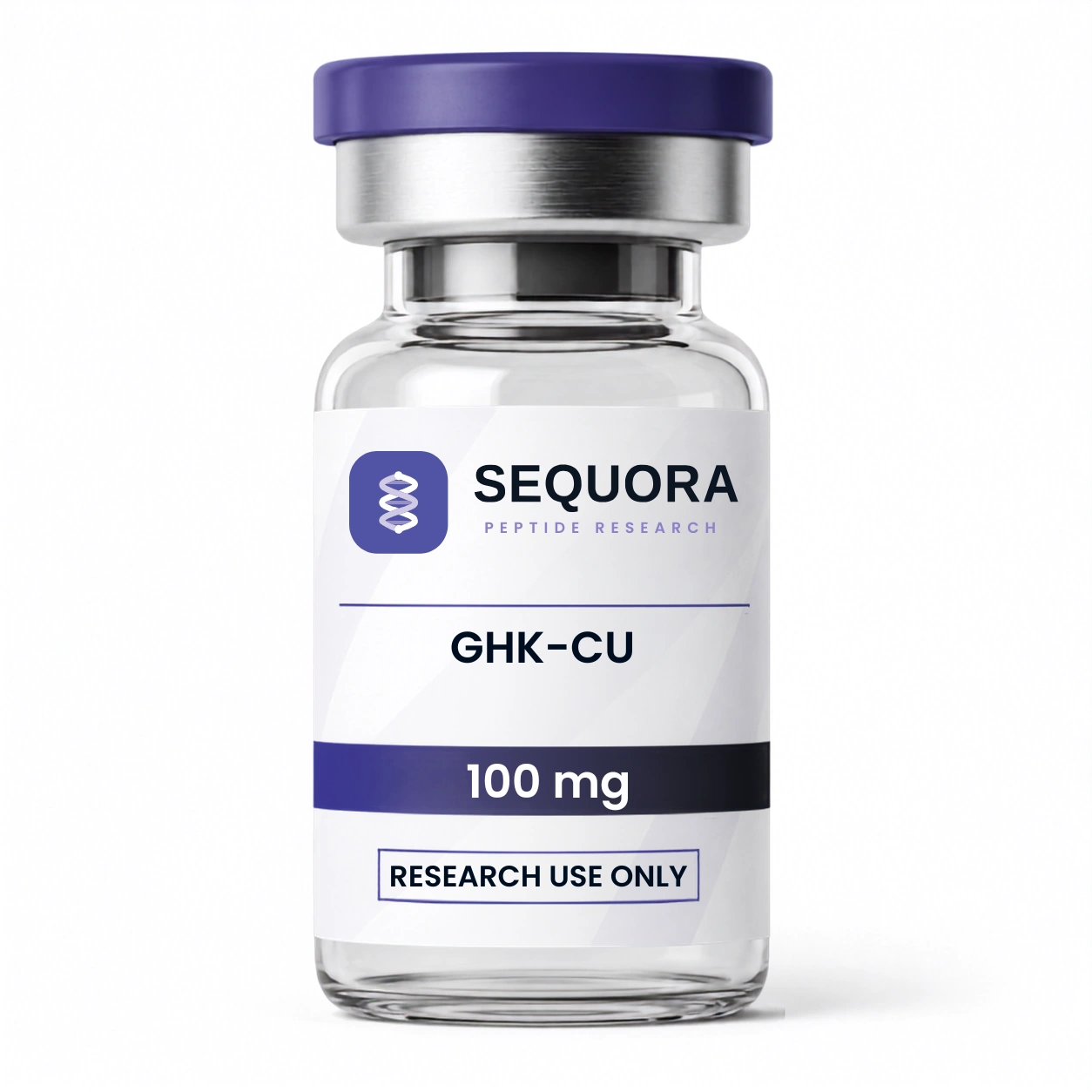
GHK-Cu 100mg is a copper-binding tripeptide studied in cellular signaling, tissue repair pathways, and regenerative research. Supplied by Sequora Peptides strictly for laboratory research use only.
| Molecular Formula | C14H22CuN6O4 |
|---|---|
| Molecular Mass | 401.91 g/mol |
| Monoisotopic Mass | 401.099850 g/mol |
| Polar Area | 178 Ų |
| Complexity | 445 |
| XLogP | -4.8 |
| Heavy Atom Count | 25 |
| Hydrogen Bond Donor Count | 5 |
| Hydrogen Bond Acceptor Count | 7 |
| Rotatable Bond Count | 10 |
Every batch is verified for identity and purity by an independent lab before release.
Scan your batch code to pull the full certificate — chromatogram included.
Material compromised in transit is replaced against the original procurement record.
GHK-Cu, also known as copper tripeptide-1, is a naturally occurring copper-binding peptide complex formed from glycyl-L-histidyl-L-lysine (GHK) and copper ions. GHK was first identified in human plasma in the 1970s, and research has since examined its role in cellular signaling, extracellular matrix regulation, collagen and elastin biology, and tissue-remodeling pathways.
GHK has a high affinity for copper and forms the GHK-Cu complex under physiological conditions. Laboratory research has investigated GHK-Cu in models of fibroblast activity, extracellular matrix remodeling, angiogenic signaling, oxidative stress, and skin-cell biology. A 2015 review described its ability to influence collagen, glycosaminoglycan, metalloproteinase, and related cellular pathways, while later research has continued to examine its molecular effects.
Recent research continues to explore copper-peptide systems. A 2026 study investigated GHK-Cu incorporated into a hydrogel system and examined its interaction with glucose oxidation, oxygen generation, and tissue-repair processes in an experimental wound model.
For research purposes, GHK-Cu is therefore of interest in peptide chemistry, copper-binding biology, cellular signaling, extracellular matrix research, and skin-cell models. Much of the evidence remains preclinical, so further research is needed to characterize its mechanisms across different experimental systems.
Research Use Only: This product, and all products available at Sequora Peptides, are intended exclusively for laboratory research. It is not intended for human or veterinary use, diagnosis, treatment, or prevention of disease.

COA ✓
COA ✓
COA ✓
This site supplies chemicals strictly for laboratory research. You must confirm both statements below to enter.
Products are supplied for laboratory research use only and are not for human or veterinary use.