
Institutional accounts only · Pricing and quotes released after verified laboratory registration
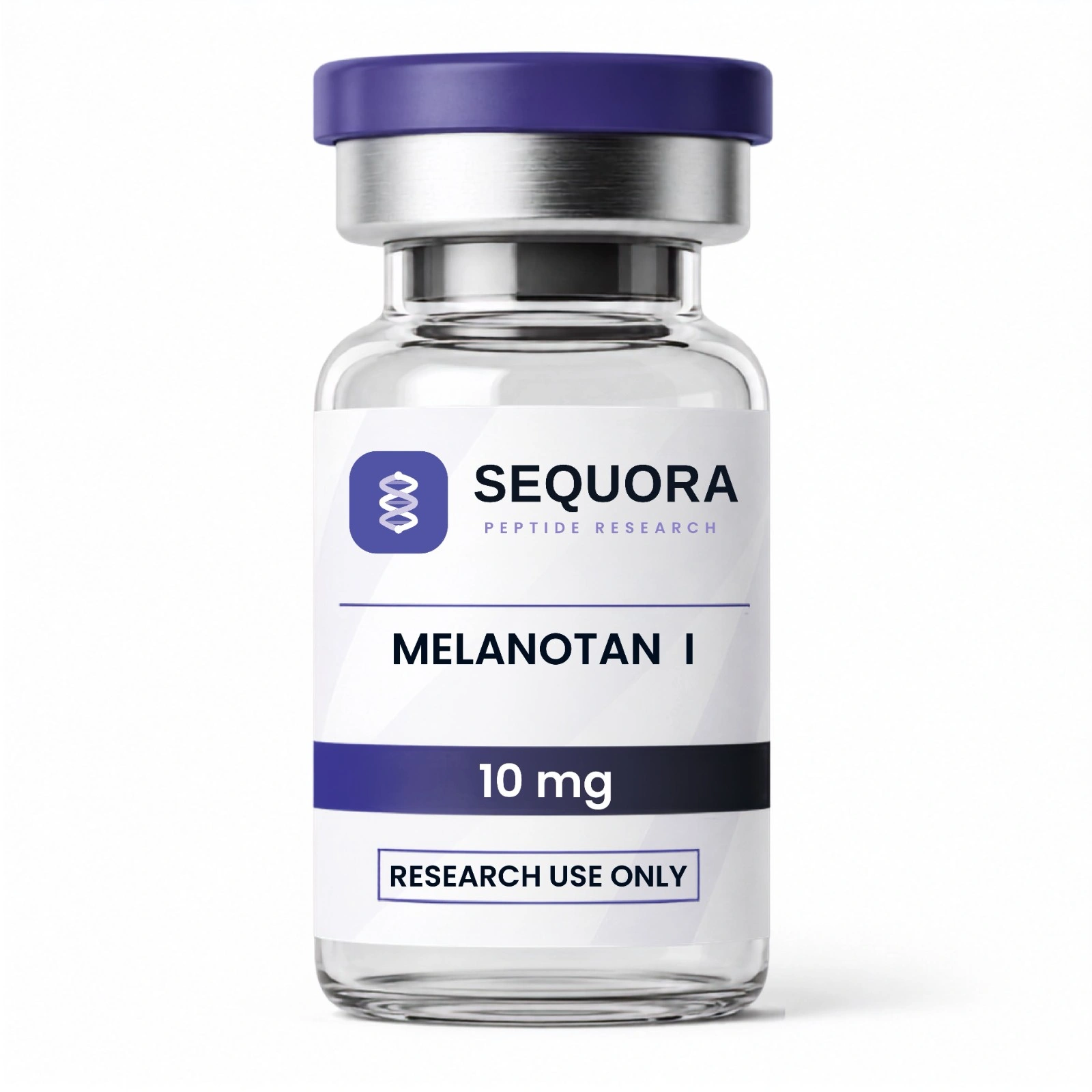
Melanotan I 10mg is a research peptide studied for its activity within the melanocortin system and its relationship with melanin production. Researchers investigate Melanotan I in controlled studies involving melanocortin receptors, pigmentation biology, and related peptide pathways.
Every batch is verified for identity and purity by an independent lab before release.
Scan your batch code to pull the full certificate — chromatogram included.
Material compromised in transit is replaced against the original procurement record.
Melanotan I, or Afamelanotide, is a synthetic peptide that acts as an analog of the naturally occurring α-melanocyte-stimulating hormone (α-MSH), which controls the process of skin pigmentation through activation of the melanocortin-1 receptor (MC1R). Activation of MC1R by Afamelanotide stimulates the synthesis of eumelanin, a darker type of melanin responsible for skin pigmentation and protection against UV irradiation. Therefore, the use of this peptide in various areas of medicine, such as dermatology, photobiology, melanogenesis, and signaling by melanocortin receptors, was studied.
The pharmacological effects of this peptide have been described in Afamelanotide: A Review in Erythropoietic Protoporphyria published in Drugs. The review describes the results obtained in numerous preclinical studies and clinical trials on the ability of Afamelanotide to stimulate the production of eumelanin and increase sunlight tolerance in erythropoietic protoporphyria (EPP). In particular, the review analyzes the pharmacology, mechanism of action, effectiveness, and safety of Afamelanotide. Clinical studies became the basis for the approval of Afamelanotide as the first melanocortin receptor agonist for the treatment of adults with erythropoietic protoporphyria (EPP).
Apart from its clinically approved application, the compound has been studied further in laboratories and clinics in order to learn more about its function in the processes of melanogenesis, photoprotection, oxidative stress, melanocortin receptor functioning, and skin physiology. Further studies of the matter contribute to the overall expansion of knowledge about MC1R signaling and its significance in dermatology.
If you need Melanotan I (Afamelanotide) 10mg or any other research peptides, we recommend Sequora Peptide, which produces only high-quality research-grade Afamelanotide peptide for Research Use Only (RUO).
Afamelanotide, referred to as Melanotan I, is an analog of α-melanocyte stimulating hormone (α-MSH), designed for improving the peptide’s stability and biological activity. Through the use of certain amino acid substitutions, the peptide with increased biological half-life and higher affinity to the melanocortin-1 receptor (MC1R) was produced. Because of the above properties, Afamelanotide became one of the most widely researched melanocortin peptides within dermatology and photobiology studies.
Afamelanotide was synthesized to increase the stability of endogenous α-MSH without reducing its biological activity. This goal was achieved through the substitution of methionine by norleucine (Nle) at position 4 and of L-phenylalanine by D-phenylalanine at position 7 of the peptide’s sequence.
Based on Afamelanotide: A Review in Erythropoietic Protoporphyria that was published in the journal Drugs, Afamelanotide has been studied for the potential of stimulating eumelanin production through activation of the melanocortin-1 receptor (MC1R). Enhanced eumelanin production increases the skin’s intrinsic capacity for protection against the damaging effects of ultraviolet (UV) light through absorption and scattering of UV rays and decreasing oxidative stress.
The clinical research reviewed here shows increased light tolerance among patients suffering from erythropoietic protoporphyria (EPP), and the compound has been approved for use in the treatment of this condition in various countries.
Aside from its recognized utility in the treatment of EPP, current scientific research focuses on Afamelanotide in the following areas:
While Afamelanotide has already exhibited well-defined pharmacology and clinical efficacy in the treatment of EPP, scientific research is still being done to find out more biological roles of the melanocortin system.
The primary way through which afamelanotide acts biologically is by binding to the melanocortin-1 receptor (MC1R), a G protein-coupled receptor (GPCR) found in melanocytes, which are specialized skin cells tasked with the production of melanin. The activation of the receptor leads to cellular processes that trigger the production of eumelanin, a darker form of melanin.
Afamelanotide acts as a strong MC1R agonist. By binding to this receptor, afamelanotide activates the Gs protein, leading to the stimulation of adenylyl cyclase and elevation of cAMP (intracellular cyclic adenosine monophosphate). As stated in the “Melanocortin Receptors, Melanotropic Peptides, and Penetrating Pigmentary Disorders” article in the New England Journal of Medicine, this mechanism is essential in the regulation of melanocyte function and melanin production.
The increase in cyclic adenosine monophosphate (cAMP) causes protein kinase A activation, leading to heightened microphthalmia-associated transcription factor (MITF) activity. MITF, in turn, controls the production of melanogenic enzymes like tyrosinase (TYR), tyrosinase-related protein 1 (TYRP1), and dopachrome tautomerase (DCT), which are responsible for generating eumelanin. The latter is more protective against UV-induced oxidative damage than pheomelanin.
Anecdotal evidence suggests that increased eumelanin production reduces the risk of UV-induced damage by enhancing the skin’s endogenous capacity to absorb and dissipate UV energy while minimizing oxidative stress and DNA damage. According to Afamelanotide: A Review in Erythropoietic Protoporphyria published in Drugs, such photoprotection ultimately improves light tolerance in patients with erythropoietic protoporphyria, which underlies Afamelanotide’s therapeutic indication.
The melanocortin system’s pleiotropic roles in regulating oxidative stress response, inflammatory pathways, and skin physiology beyond melanogenesis are currently under investigation. Indeed, preclinical and clinical studies exploring the receptor’s involvement in cutaneous wound healing, immune regulation, and inflammatory skin diseases are ongoing. Nevertheless, despite the promising preliminary results, further research is needed to elucidate the melanocortin system’s endocrine and immunological roles fully.
Afamelanotide has been studied extensively in preclinical models, humans, and observational studies. It has been primarily investigated for its mechanisms in melanogenesis, photoprotection, melanocortin receptors, and erythropoietic protoporphyria (EPP). Afamelanotide is one of the few melanocortin peptides with substantial clinical evidence supporting its therapeutic utility in randomized controlled trials. Unlike other peptides in the class, Afamelanotide has shown clinical efficacy in controlled studies.
Afamelanotide has the most clinical evidence supporting its therapeutic utility in the treatment of erythropoietic protoporphyria (EPP), a rare inherited blood disorder caused by a low level of an enzyme called ferrochelatase. According to Afamelanotide for Erythropoietic Protoporphyria, a study published in the New England Journal of Medicine, patients who received Afamelanotide showed an increased ability to tolerate direct sunlight compared to those who received a placebo.
The study also found that the peptide had a beneficial effect on the patients’ quality of life by reducing painful photosensitivity events. The efficacy of Afamelanotide in the management of EPP has been supported by several clinical studies.
According to Afamelanotide: A Review in Erythropoietic Protoporphyria published in the journal Drugs, preclinical research has demonstrated that Afamelanotide induces eumelanin production by stimulating the melanocortin 1 receptor. The study adds that increased production of eumelanin reduces oxidative stress and DNA damage by UV-A irradiation during exposure to sunlight.
Clinical studies and post-marketing reports have demonstrated that Afamelanotide is generally safe when administered under recommended clinical conditions. Researchers are currently studying the long-term effects of the medication through observational studies and patient registries. The findings will provide more information on the therapeutic efficacy and safety of Afamelanotide and its use in the treatment of EPP.
Afamelanotide is currently being investigated for its potential therapeutic applications in a wide range of clinical conditions including:
Though the research on Afamelanotide continues to broaden our understanding of melanocortin receptors, most of the therapies mentioned above are still experimental and require further clinical trials to demonstrate efficacy before they can be used in clinical practice.
Afamelanotide is investigated for multiple applications related to the melanocortin-1 receptor due to the compound’s established role in the treatment of erythropoietic protoporphyria. The drug’s reported activity spans diverse areas of melanin biology research, cutaneous photobiology, inflammatory skin diseases, oxidative stress, and cellular protection processes.
Afamelanotide is subject to continued scientific investigations regarding its
impact on:
As noted in Afamelanotide: A Review in Erythropoietic Protoporphyria, published in Drugs, current research trends are focused on further elucidating the biology of melanocortin receptors in UV-induced skin protection via enhanced production of eumelanin. The potential impact of melanocortin-1 receptor agonism on a range of additional dermatological conditions is also under clinical consideration.
Afamelanotide is approved by the FDA under the brand name Scenesse® for the treatment of increased tolerance to light in adult patients diagnosed with erythropoietic protoporphyria. The drug was granted regulatory approval in a number of additional jurisdictions on the basis of successful phase III trials.
The applications of Afamelanotide beyond the treatment of erythropoietic protoporphyria are still under scientific investigation. Melanotan I (Afamelanotide) 10mg for research from Sequora Peptide is exclusively provided for Research Use Only (RUO). The product is not fit for clinical, diagnostic, or human use in any form.
Correct storage conditions and techniques play a crucial role in ensuring the stability and integrity of Melanotan I (Afamelanotide) 10mg during laboratory investigations.
To maintain the peptide structure during experiments:
Proper storage and handling help maintain peptide quality and support reliable, reproducible experimental results.
Melanotan I (Afamelanotide) 10mg is a synthetic analogue of α-melanocyte-stimulating hormone (α-MSH). It is used by researchers to study melanocortin receptor signaling, melanogenesis, photoprotection, skin pigmentation, and dermatological biology in laboratory experiments.
Afamelanotide acts mainly via activation of the melanocyte melanocortin-1 receptor (MC1R). This activation boosts intracellular signaling pathways that stimulate the production of eumelanin, the darker form of melanin that helps protect the skin from ultraviolet (UV) radiation. Researchers are still studying this mechanism to better understand melanocortin biology and skin physiology.
Research on Melanotan I is conducted in a range of scientific areas including:
Many such applications continue to be active fields of biomedical research.
Afamelanotide (the active peptide in Melanotan I) is approved by the U.S. Food and Drug Administration (FDA) as Scenesse® for increasing pain-free light exposure in adults with erythropoietic protoporphyria (EPP). However, Melanotan I (Afamelanotide) 10mg by Sequora Peptide is a Research Use Only (RUO) product and not approved for human consumption or therapeutic use.
The lyophilized peptide should be stored between 2°C and 8°C (36°F to 46°F) in a cool and dry place away from heat, light, and moisture. The reconstituted form of the solution should be refrigerated and away from any repeated freezing and thawing.
No. Melanotan I (Afamelanotide) 10 mg by Sequora Peptide is designed for Research Use Only (RUO) and is not meant for any human use.
The product Melanotan I (Afamelanotide) 10mg is a research item manufactured by Sequora Peptide for Research Use Only (RUO). It is designed for exclusive use in laboratory research only and can’t be used for any other purpose, including therapeutic application, diagnostic application, veterinary use, and self-administration.
While it is important to state that Melanotan I (Afamelanotide) 10mg is approved by the U.S. Food and Drug Administration (FDA) under the brand name Scenesse® for the treatment of erythropoietic protoporphyria (EPP), it is essential to note that this item produced by Sequora Peptide is neither manufactured nor approved for medical or pharmaceutical use. Nothing stated on this page constitutes a claim about the diagnosis, treatment, mitigation, curing, or prevention of any disease.
All data presented on this page are meant for educational and scientific purposes only and reflect the results of the research.
The researcher is completely accountable for seeing to it that the procurement, storage, handling, and utilization of this substance conforms to all relevant institutional, local, national, and international laws and guidelines.
Handling of this substance is the exclusive domain of suitably equipped laboratories run by scientifically trained personne
All products sold by Sequora Peptides are intended strictly for research purposes only. They are not intended for human or veterinary use, consumption, diagnosis, treatment, or any other clinical application.
1. Afamelanotide: A Review in Erythropoietic Protoporphyria.
2. Afamelanotide for Erythropoietic Protoporphyria.
3. Melanocortin-1 Receptor: Structure, Function, and Regulation.
4. Scenesse® (Afamelanotide) Prescribing Information.
5. PubChem Compound Summary – Afamelanotide.
6. ClinicalTrials.gov – Afamelanotide Clinical Studies.
COA ✓

COA ✓

COA ✓
TB-500 is a synthetic research peptide related to thymosin beta-4 and is studied for its role in cell migration, tissue repair pathways, and angiogenesis. It is intended strictly for laboratory research and is not approved for human or veterinary use.
This site supplies chemicals strictly for laboratory research. You must confirm both statements below to enter.
Products are supplied for laboratory research use only and are not for human or veterinary use.